Auto insurance is full of terms that sound similar but cover very different things. Comprehensive and collision are two of the most confused. Knowing the difference can save you from a surprise denial after a claim.
Let’s break it down.
What Collision Coverage Pays For
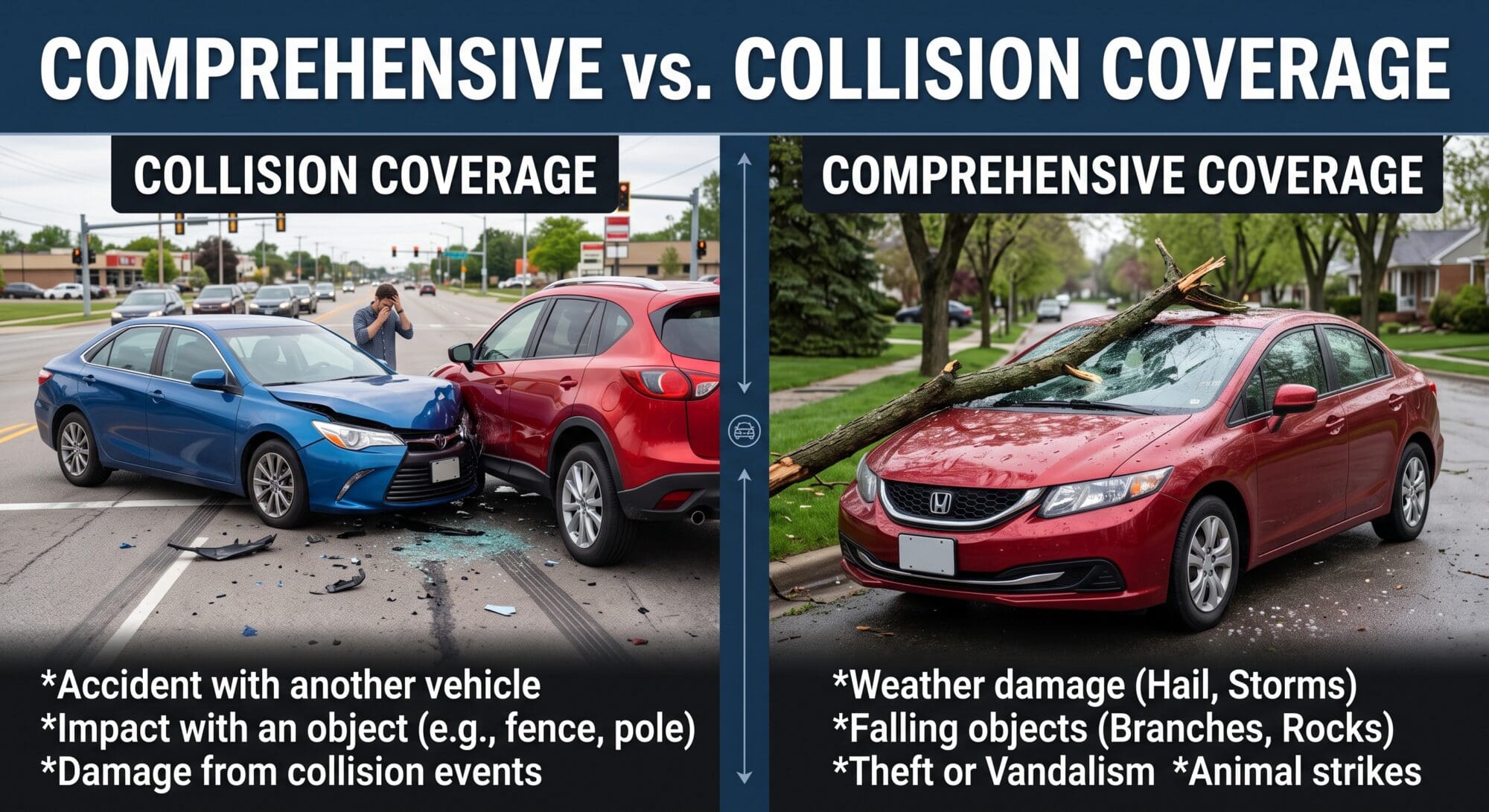
Collision coverage kicks in when your car hits another vehicle or object, or flips over, regardless of who caused the accident. Think hitting a guardrail, another car, or a mailbox. It pays to repair or replace your vehicle up to its actual cash value, minus your deductible.
What Comprehensive Coverage Pays For
Comprehensive covers damage from just about everything that isn’t a collision. That includes theft, vandalism, fire, hail, flooding, falling objects, and hitting an animal. If a hailstorm dents your hood or someone breaks a window to steal your stereo, comprehensive is what pays.
The Key Difference
Collision is about impact. Comprehensive is about almost everything else. Both usually come with a separate deductible, and you can carry different deductible amounts for each.
Do You Need Both?
If you own your car outright, comprehensive and collision are optional. If you’re financing or leasing, your lender will almost always require both. Even without that requirement, dropping either coverage means paying out of pocket for repairs or a replacement vehicle after an accident or unexpected event.
Check our auto insurance page to see how these coverages fit into a full policy.
How to Decide on Deductibles
A higher deductible lowers your premium but means more out of pocket when you file a claim. A good rule of thumb is to set your deductible at an amount you could comfortably pay today if you needed to.
More From Our Blog
Comprehensive and collision are just two pieces of a bigger picture. Check out our earlier post, What Is Full Coverage Auto Insurance?, for how these coverages combine with liability to make up a full policy.
Get the Right Coverage
Your vehicle, driving habits, and budget all factor into what mix of coverage makes sense. Our team can walk through your policy and make sure you’re not over or under protected.
Request a quote or contact an agent to review your options.