If you’ve been shopping for auto insurance, you’ve probably come across the term “full coverage.” It’s one of the most commonly used phrases in the insurance industry, but it’s also one of the most misunderstood.
Many drivers assume that “full coverage” means every possible situation is covered. In reality, there is no standard insurance policy officially called “full coverage.” Instead, the term generally refers to a combination of coverages that provide broader financial protection than liability insurance alone.
Understanding what full coverage typically includes can help you choose an auto insurance policy that fits your vehicle, your budget, and your driving habits.
What Does “Full Coverage” Mean?
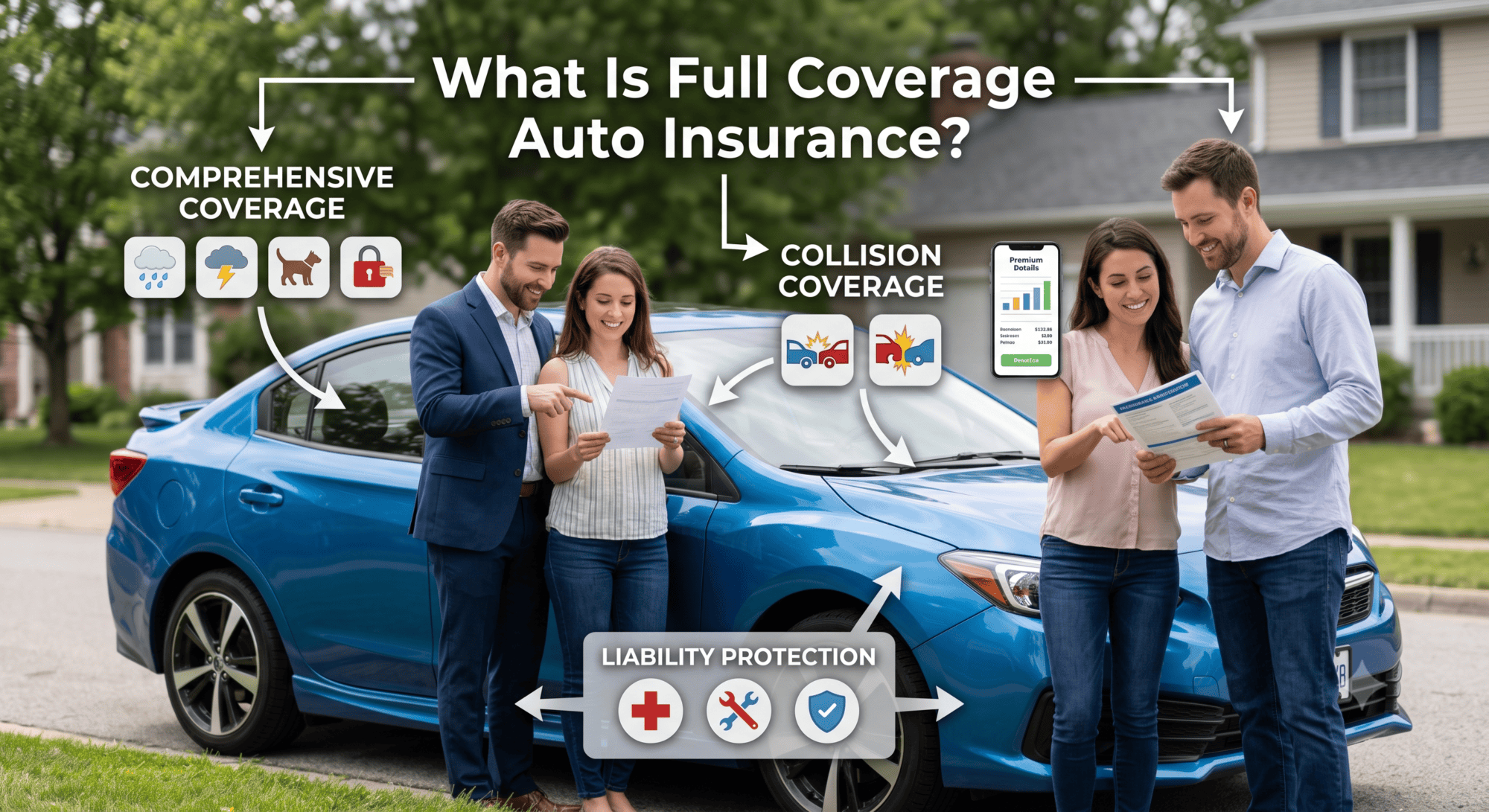
While definitions can vary, full coverage auto insurance usually refers to a policy that includes:
-
Liability Insurance
-
Collision Coverage
-
Comprehensive Coverage
These three coverages work together to provide protection for different types of risks you may encounter on the road.
Depending on your insurance company, you may also choose to add optional coverages for even greater protection.
Liability Insurance
Liability coverage is required for drivers in most states and is one of the most important parts of an auto insurance policy.
If you’re responsible for an accident, Liability Insurance may help pay for covered:
-
Bodily injuries to others
-
Property damage to another person’s vehicle or property
-
Legal expenses for covered claims
However, liability coverage generally does not pay for damage to your own vehicle.
Collision Coverage
Collision Coverage helps pay for damage to your own vehicle after a covered collision, regardless of who was at fault.
Examples include:
-
Hitting another vehicle
-
Striking a guardrail
-
Backing into a pole
-
Rolling your vehicle
If your vehicle is financed or leased, your lender may require you to carry collision coverage until the loan is paid off.
Comprehensive Coverage
Comprehensive Coverage helps protect your vehicle from many non-collision events.
Covered events may include:
-
Theft
-
Vandalism
-
Fire
-
Hail damage
-
Falling trees or branches
-
Windstorms
-
Animal collisions
-
Certain weather-related damage
Comprehensive coverage helps protect your vehicle from many situations that occur when it isn’t involved in a traffic accident.
What Isn’t Included in Full Coverage?
Although “full coverage” provides broader protection than liability insurance alone, it doesn’t mean every possible expense is covered.
Depending on your policy, full coverage may not automatically include:
-
Rental car reimbursement
-
Roadside assistance
-
Gap insurance
-
New car replacement
-
Accident forgiveness
-
Custom equipment coverage
These protections are often available as optional endorsements, depending on the insurance company.
Who Should Consider Full Coverage?
Full coverage may be worth considering if you:
-
Own a newer vehicle
-
Lease your vehicle
-
Have a vehicle loan
-
Would have difficulty replacing your vehicle after a major loss
-
Want broader financial protection from unexpected events
For older vehicles with lower market values, some drivers choose to reevaluate whether collision and comprehensive coverage continue to make financial sense.
How Much Does Full Coverage Cost?
The cost of full coverage auto insurance depends on many factors, including:
-
Your driving record
-
Age and driving experience
-
Vehicle make and model
-
Where you live
-
Annual mileage
-
Coverage limits
-
Deductibles
-
Available discounts
Because every insurance company calculates premiums differently, comparing quotes from multiple carriers can help you find competitive pricing.
Can You Save Money on Full Coverage?
Yes. While full coverage generally costs more than liability-only insurance, there are several ways you may be able to lower your premium.
Ask about discounts for:
-
Bundling auto insurance with homeowners insurance or renters insurance
-
Safe driving
-
Multiple vehicles
-
Good students
-
Paperless billing
-
Automatic payments
You can also review your deductible options to find a balance between monthly premiums and out-of-pocket costs.
Why Work with an Independent Insurance Agency?
Choosing the right auto insurance isn’t just about finding the lowest premium—it’s about making sure your policy fits your needs.
An independent insurance agency can compare quotes from multiple insurance companies, explain your coverage options, and help you determine whether full coverage is the right choice for your vehicle.
They can also review available discounts and recommend coverage based on your driving habits, vehicle value, and financial goals.
Final Thoughts
Despite its name, full coverage auto insurance doesn’t cover every possible situation. Instead, it generally refers to a policy that combines Liability Insurance, Collision Coverage, and Comprehensive Coverage to provide broader protection for your vehicle.
Understanding what is—and isn’t—included can help you choose coverage with confidence and avoid surprises if you ever need to file a claim.
If you’re ready to review your current policy or compare your options, get an auto insurance quote to explore coverage from multiple carriers and find the right protection for your vehicle and your budget.